Births, Growth and Deaths
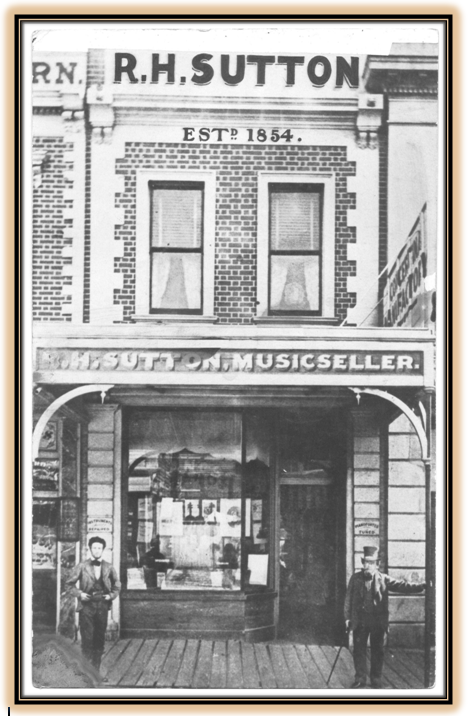 Above : Alfred Sutton & Richard H.Sutton in front of their Main Road store ~ 1874
Richard’s music business thrived, as did his family. Mary had another child in 1862, daughter EMILIE SUTTON, then another son FREDERICK SUTTON was born the following year of 1863. This brought the number of Sutton children to 6; with their growing family and the continuing success of their music business, it became clear that more space was required to accommodate the Suttons’ needs.
In 1864 Richard decided to demolish their current premises on Main Road and erect a new, larger store with living space for the family above it. He moved his family to a nearby cottage in Scotts Parade, and to raise the necessary capital he sought help from a bank and temporarily cashed in shares he had bought for Mary in the highly successful Ballarat gold mine, Band of Hope. He engaged an architect to draw up the plans and a contractor to erect the building. This new two-storey store of brick & timber included a “1st class plate glass window” and was occupied by the Suttons in May 1865; the building still stands today.
Sadly, in 1866 Mary gave birth to a still-born child; others were to follow. In 1867 another son was born but he only survived 3 months; more still-births followed in 1868, 1869, and 1870. This must have been a very difficult time for the Sutton family.
During the 1870’s a large part of R.H.Sutton’s business was the tuning and repairing of musical instruments. Richard also invented improved versions of instruments – these included an organ harmonium in 1861 and military side-drums in 1870.
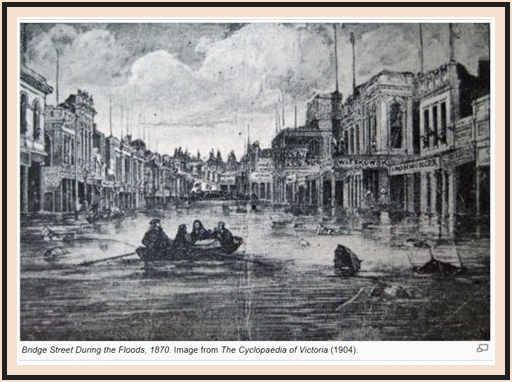
Late in October 1870 the worst of the frequent floods of the nearby Yarrowee River since Ballarat East was established, occurred. The Sutton store was built on sufficiently high ground to not be inundated, but the store’s backyard went under water. Years later, their son Alfred related how he had gone out foraging in the floodwaters at that time in the family’s bathtub.
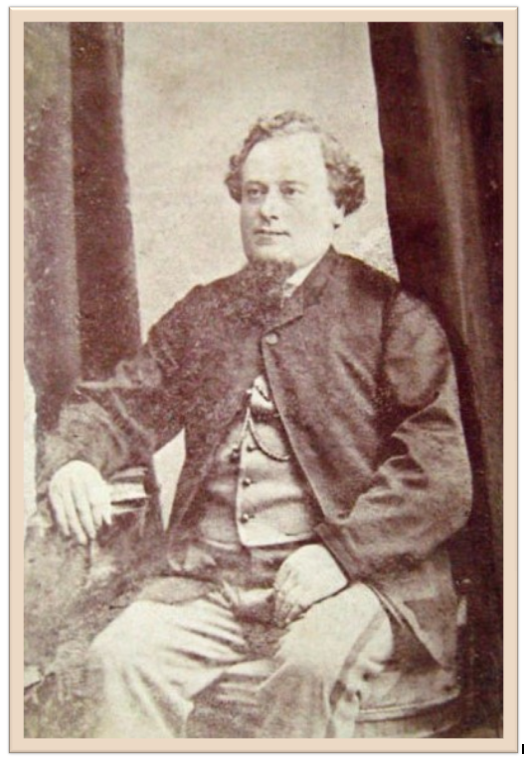
In 1873 Richard Sutton became very ill with heart problems. His 16 year old son Alfred shouldered most of the responsibility of running the business, as his elder brother Henry was obsessed with scientific studies. Then on Sunday, 24 September 1876 Richard’s health took a turn for the worst whilst most of his family was at church. They were urgently summoned and arrived in time to be by his side at the end. Richard Henry Sutton [above] was just 46 years old; his music enterprise had been operating for 22 years.
Determinedly, Mary Sutton took financial control of the business, and with Alfred’s assistance she very capably guided the stability of the family’s affairs until her own death nearly 20 years later. By November 1876, 2 months after Richard’s death, the ambitious Alfred had convinced his mother that their music business needed to have a presence in the newer, more progressing end of Ballarat located to the west. The arrival of the railway in Ballarat in 1862 had largely driven this shift in focus of the retail sector of Ballarat. New premises for the Sutton music enterprise were rented in Ballarat’s main street at 31 Sturt Street (later renumbered 29) which comprised of a showroom, a music teacher’s room, and a tuner’s workshop. For a time, both the Main Road and Sturt Street stores were run in conjunction, it being Alfred’s daily task to open and close both stores. These rented premises were later purchased outright by Mary, and she later bequeathed them to her daughter in her will.
The Main Road store continued to trade under the name
R.H.SUTTON & CO’S MUSIC WAREHOUSE
and to be the family’s home, although by then the eldest daughter Elizabeth had married and had her own home.
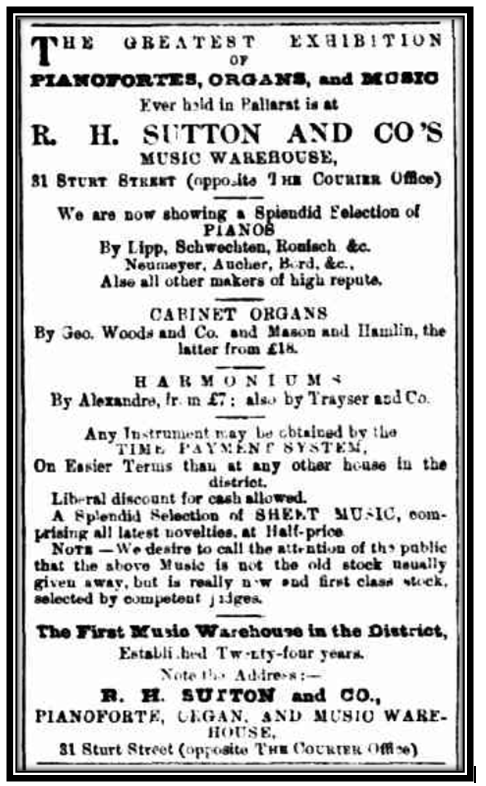
Above : Ballarat Courier, 17 February 1878
And so began a new era in the Suttons music business.
Alfred’s management style was somewhat more flamboyant than his father’s had been, although this probably was also a reflection of the more affluent times existing in the state of Victoria. As well as the trade in musical instruments, the Sturt Street store made itself available for the sale of tickets to local concerts and other community events, which no doubt fostered the entry of potential customers into their premises, and Suttons regularly advertised in the newspapers. In 1877 these ads contain, for the first time, references to “time payment” and “liberal discount for cash”.
Meanwhile, in February 1878 the Suttons eldest, inventive son Henry was experimenting with telephone connections between the Main Road and Sturt Street premises.